
L’OUVRAGE - PARC MARIE-VICTORIN MUSEUM
KINGSEY FALLS, QC
CAST IRON DISCOVERY CENTER


Area:
950 m2
Typology:
Institutional - Museum
Intervention:
New construction
Year:
Project under construction
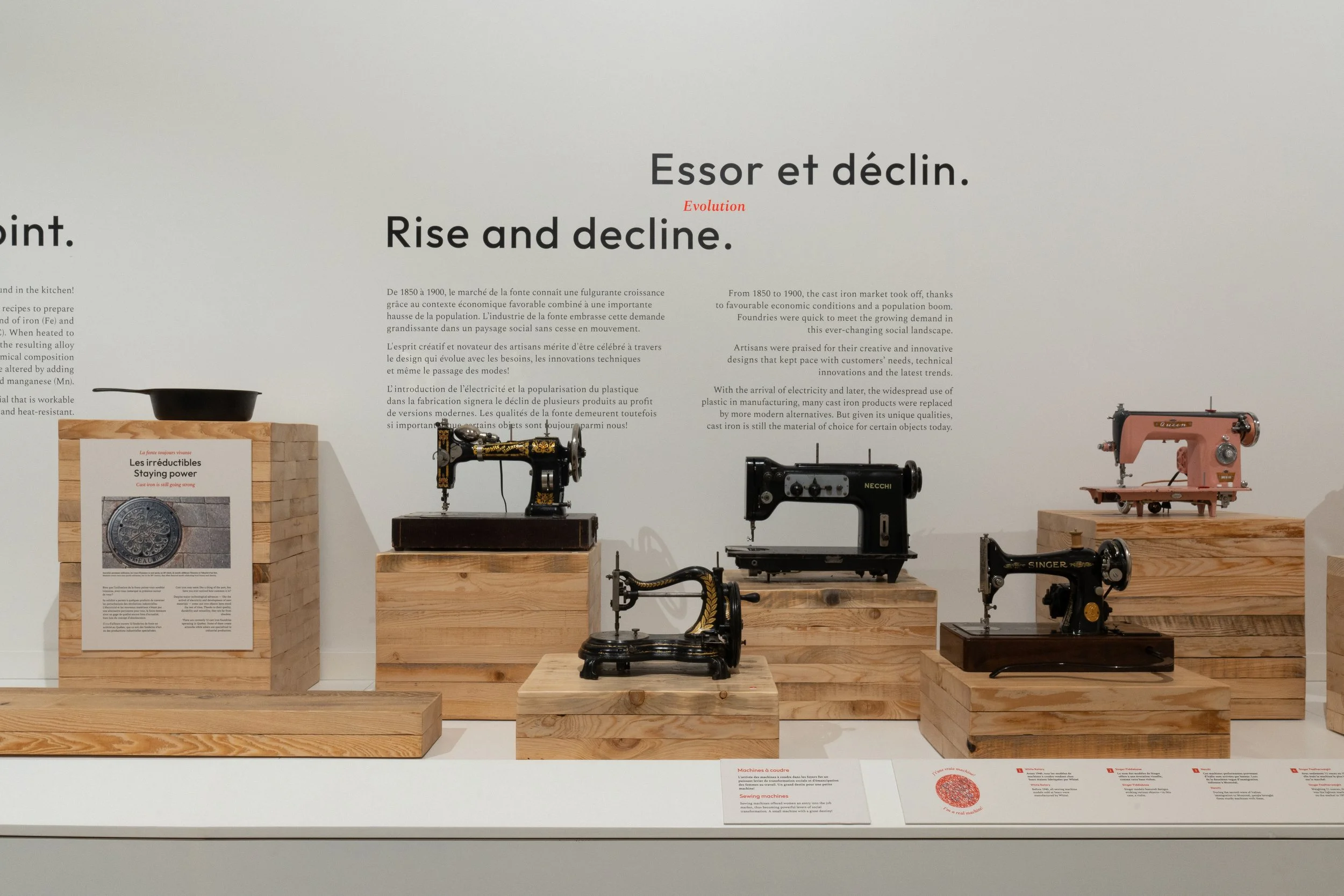
Born from a collector's dream to share Quebec's rich material history, L’Ouvrage is a discovery center dedicated to the province's cast iron objects. It showcases a collection that has been assembled and restored over the years to promote and highlight the ingenuity of regional artisans.
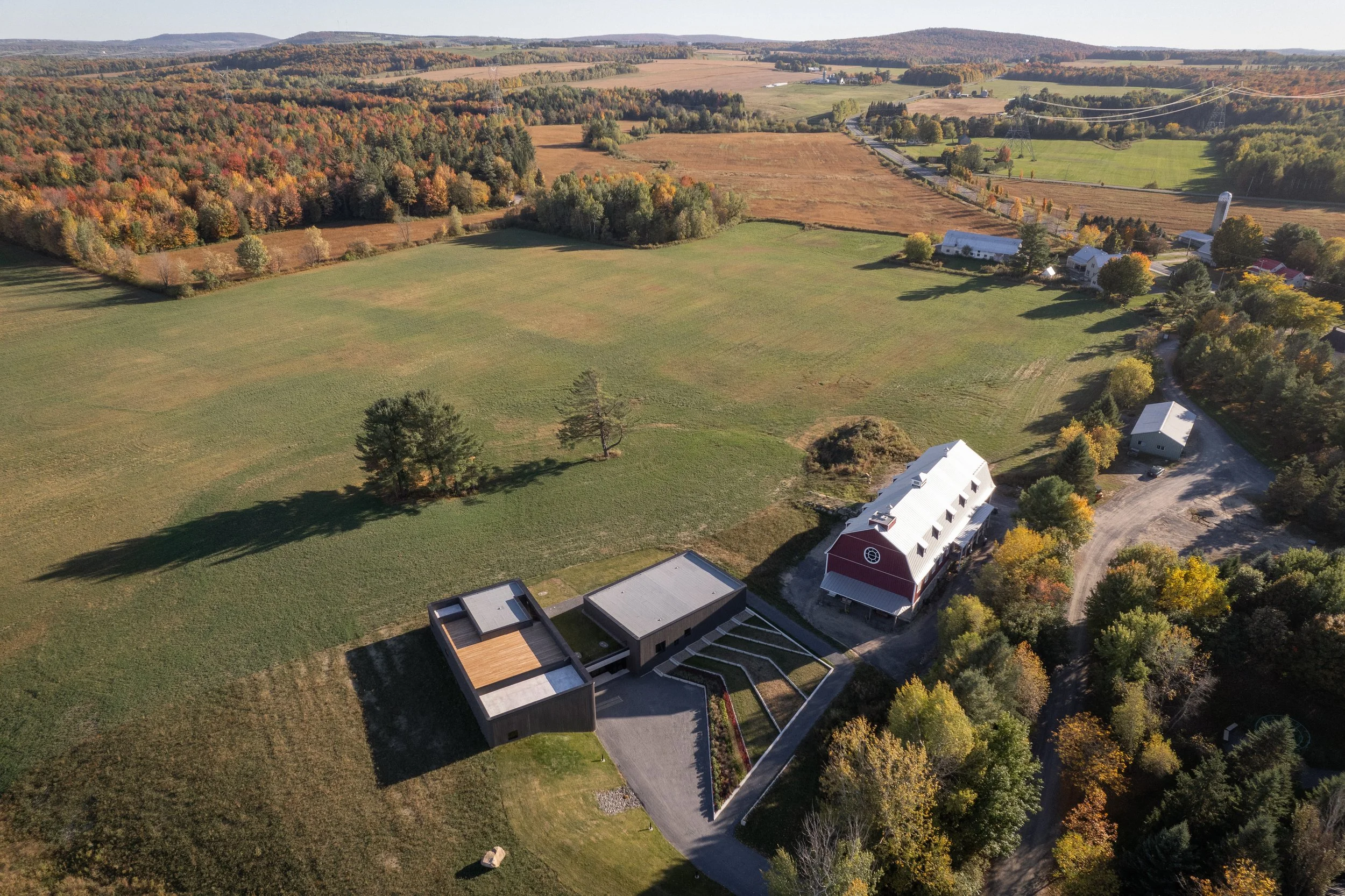
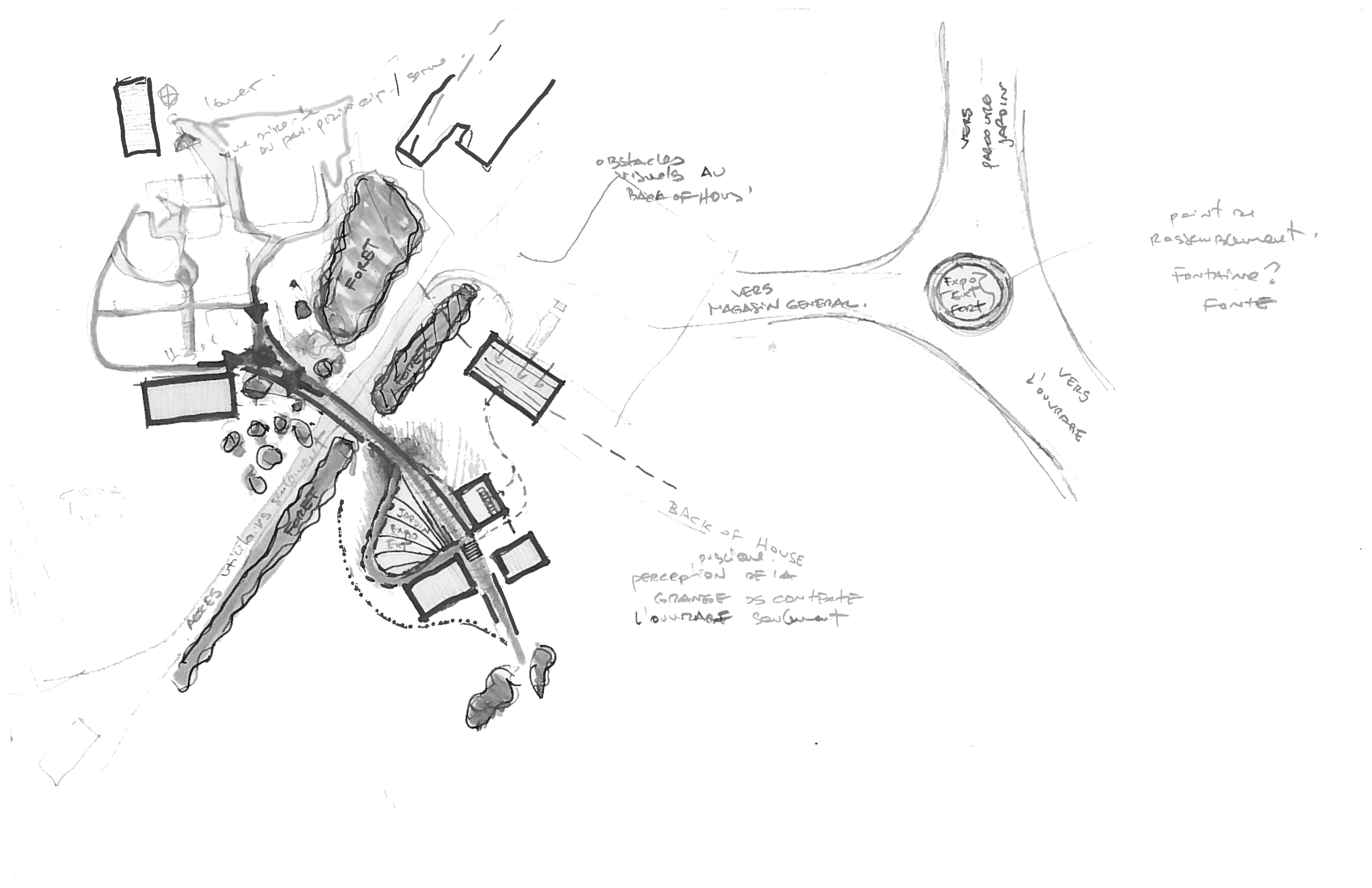
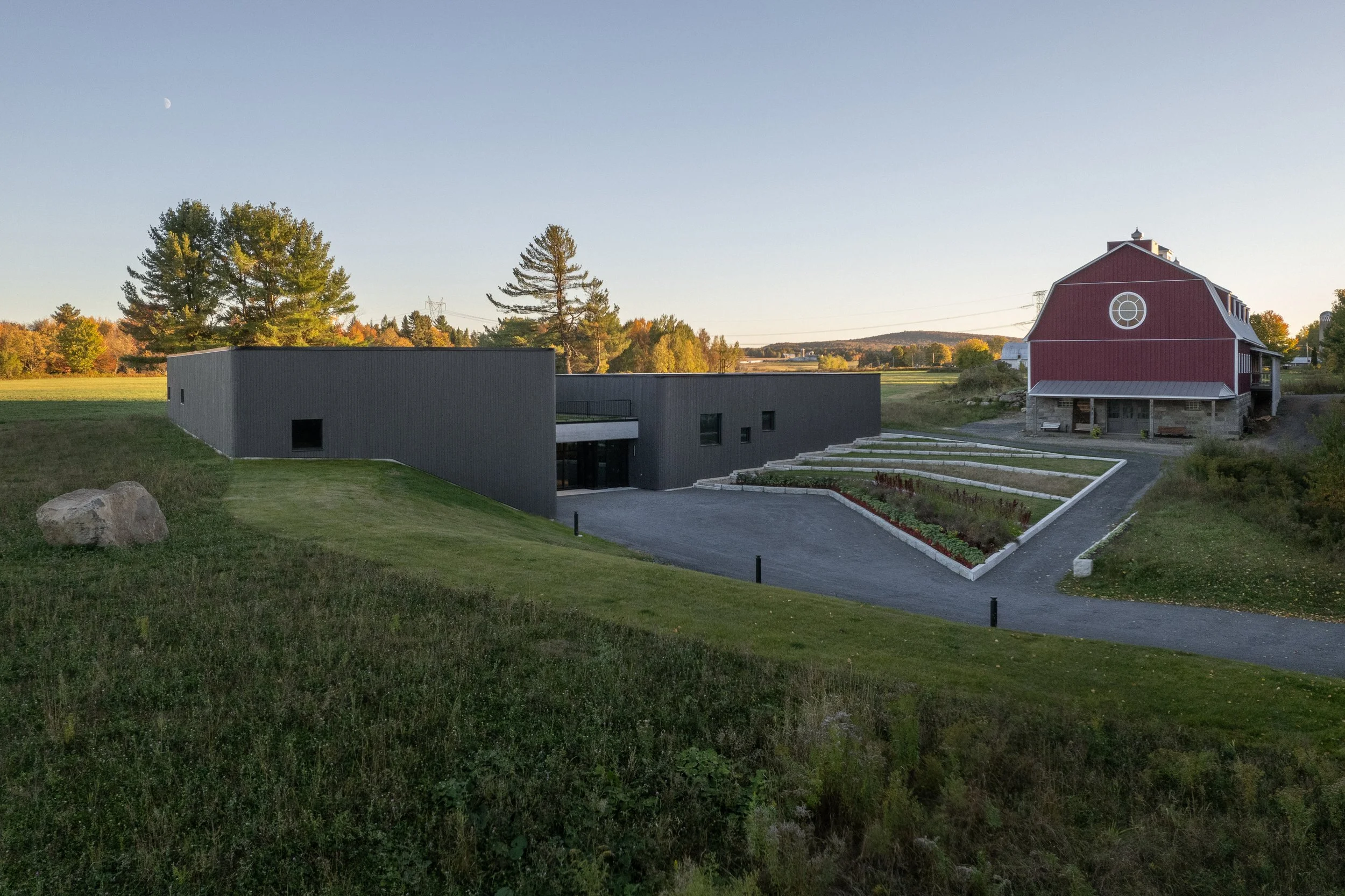
As a new addition to the Marie-Victorin Park gardens, recognized as a museum institution since 2019, the project is located in Kingsey Falls, on adjacent farmland. A group of conifers located at the heart of the site, the natural focal point of the location, was used as the starting point for the building's layout.
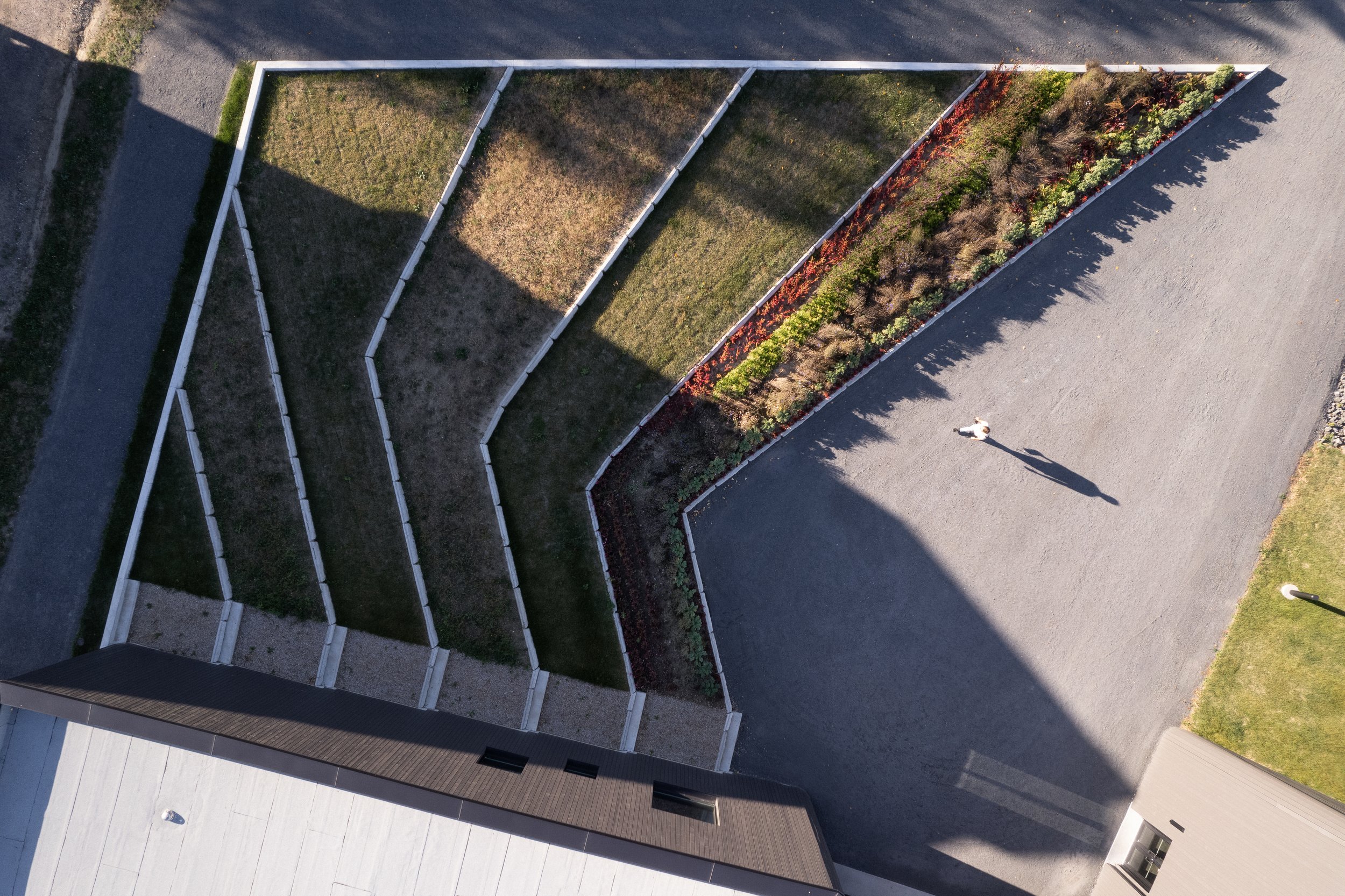
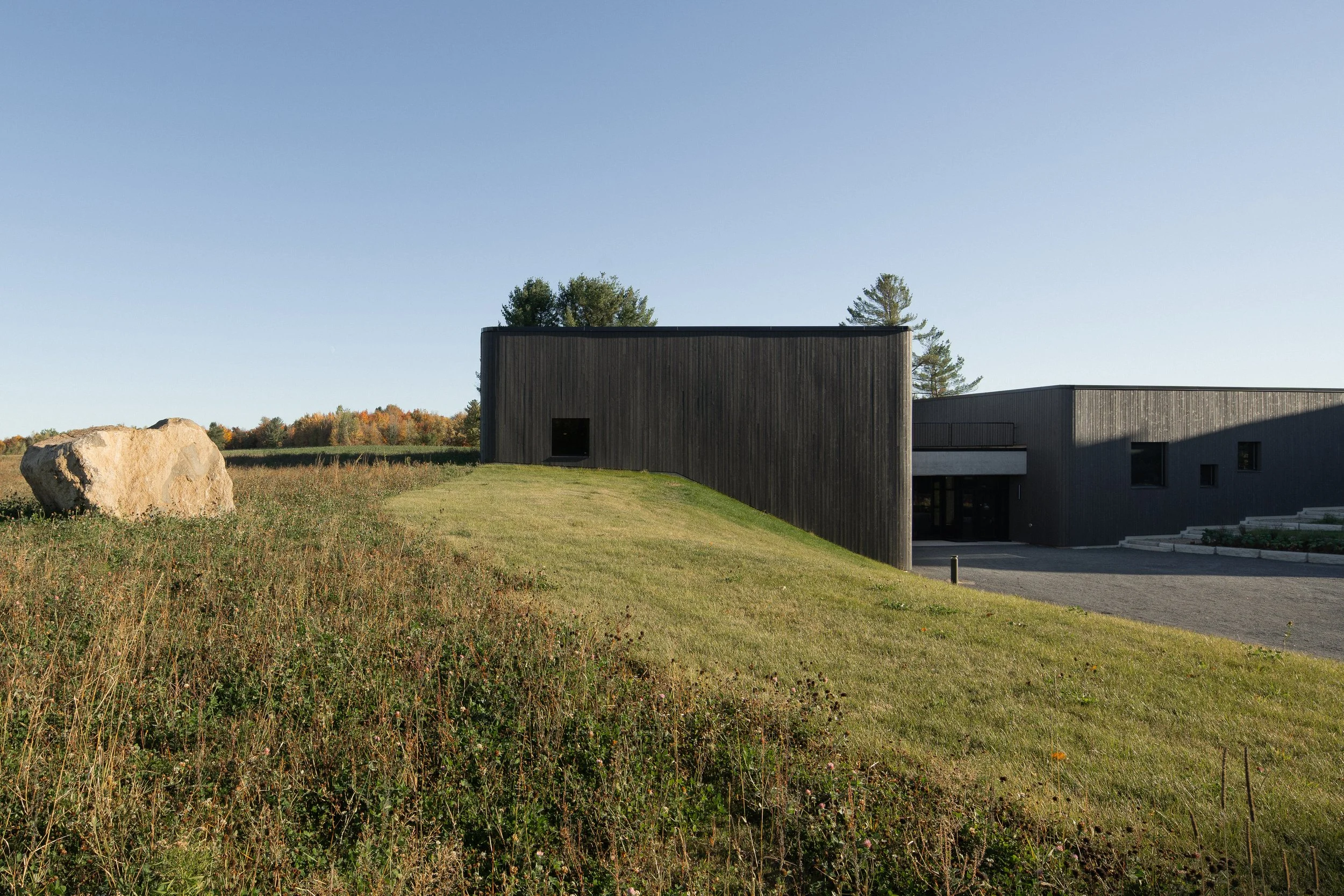
Exploring the notion of digging, both in reference to the extraction of raw materials and the search for treasures to enrich the collection, the project takes advantage of the uneven terrain and anchors itself in the ground, allowing the different volumes that compose it to inhabit the earth, all while respecting the surrounding landscape. This conceptual gesture gives rise to a delicate architecture, while improving the building's energy performance.
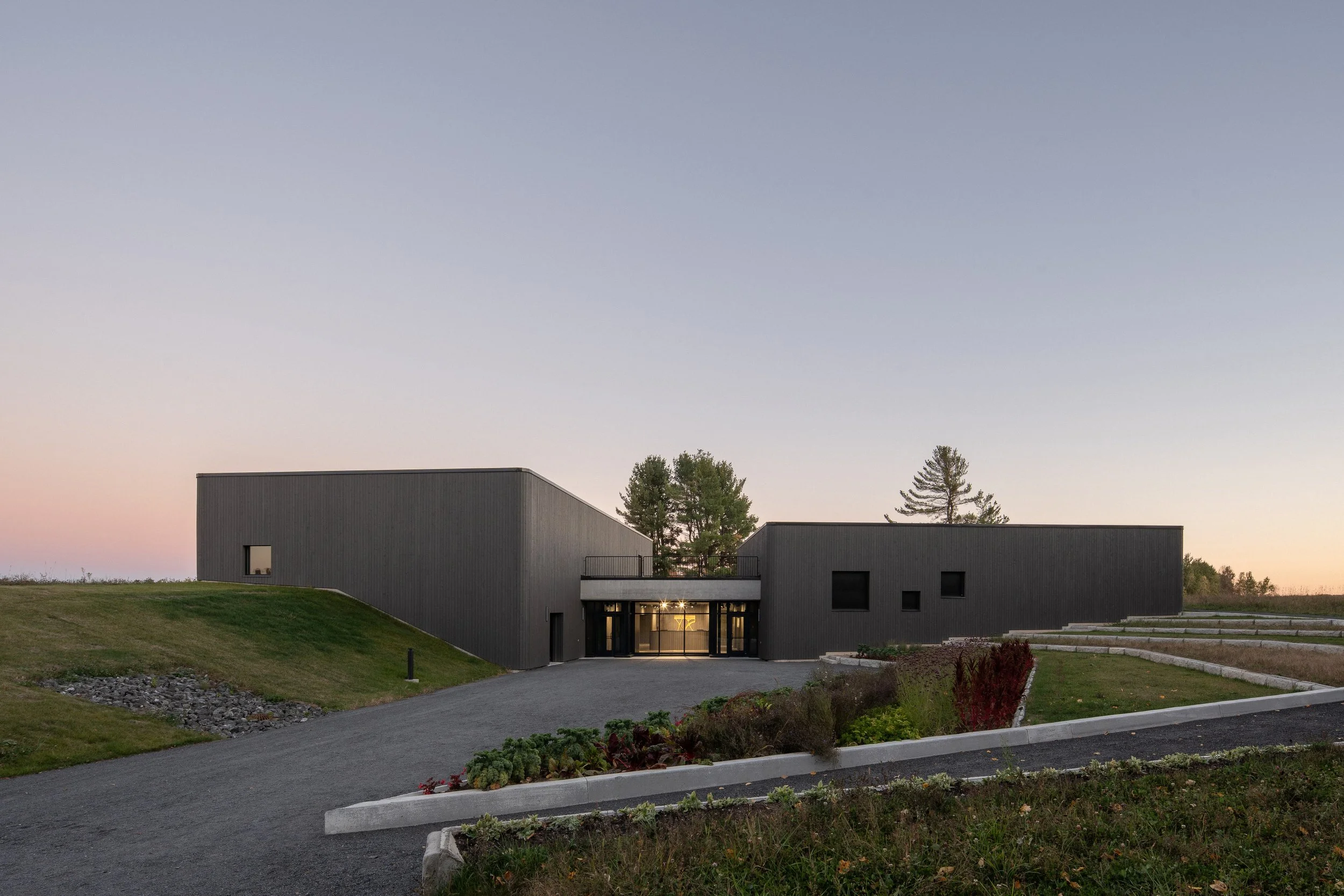
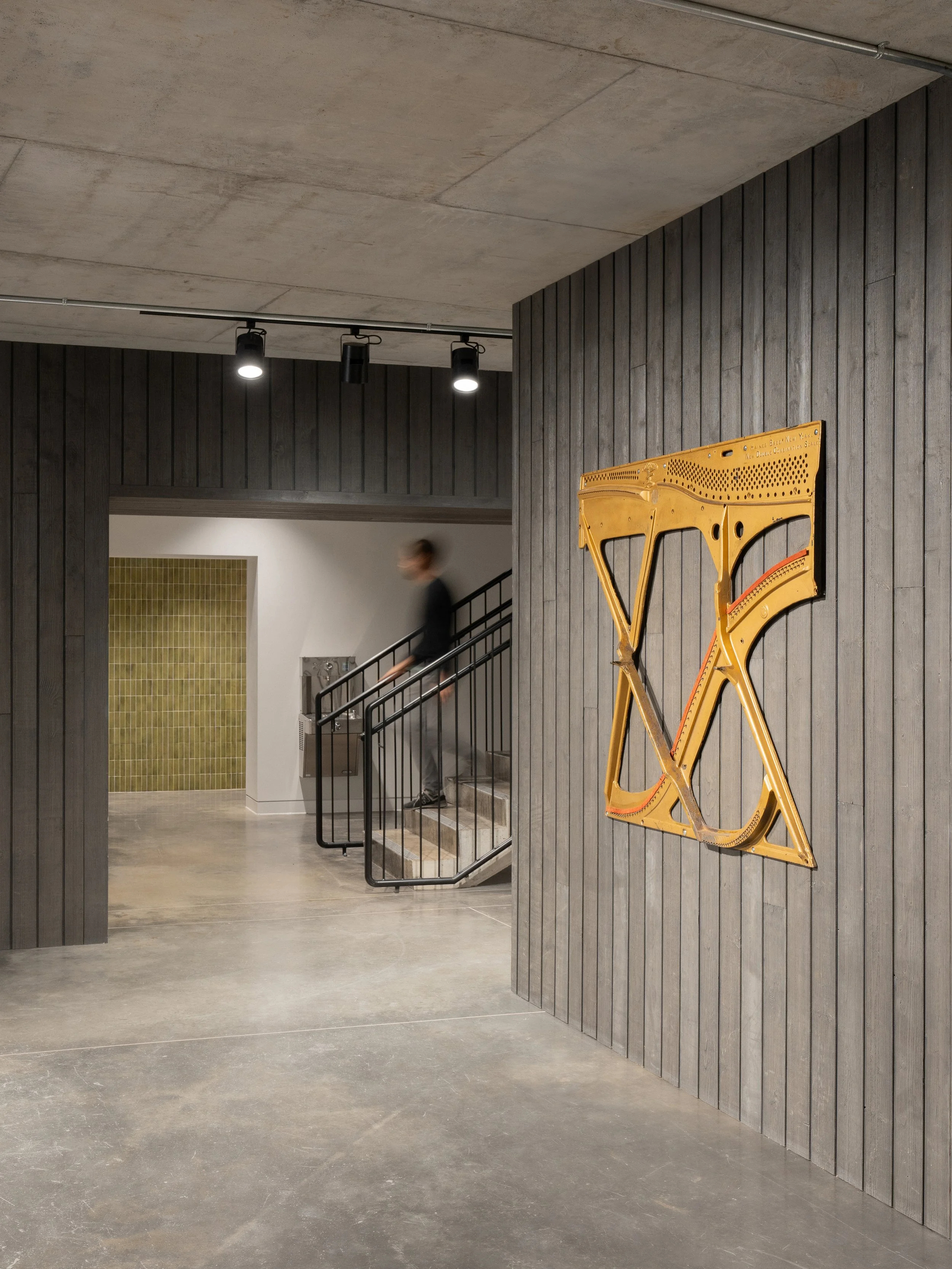
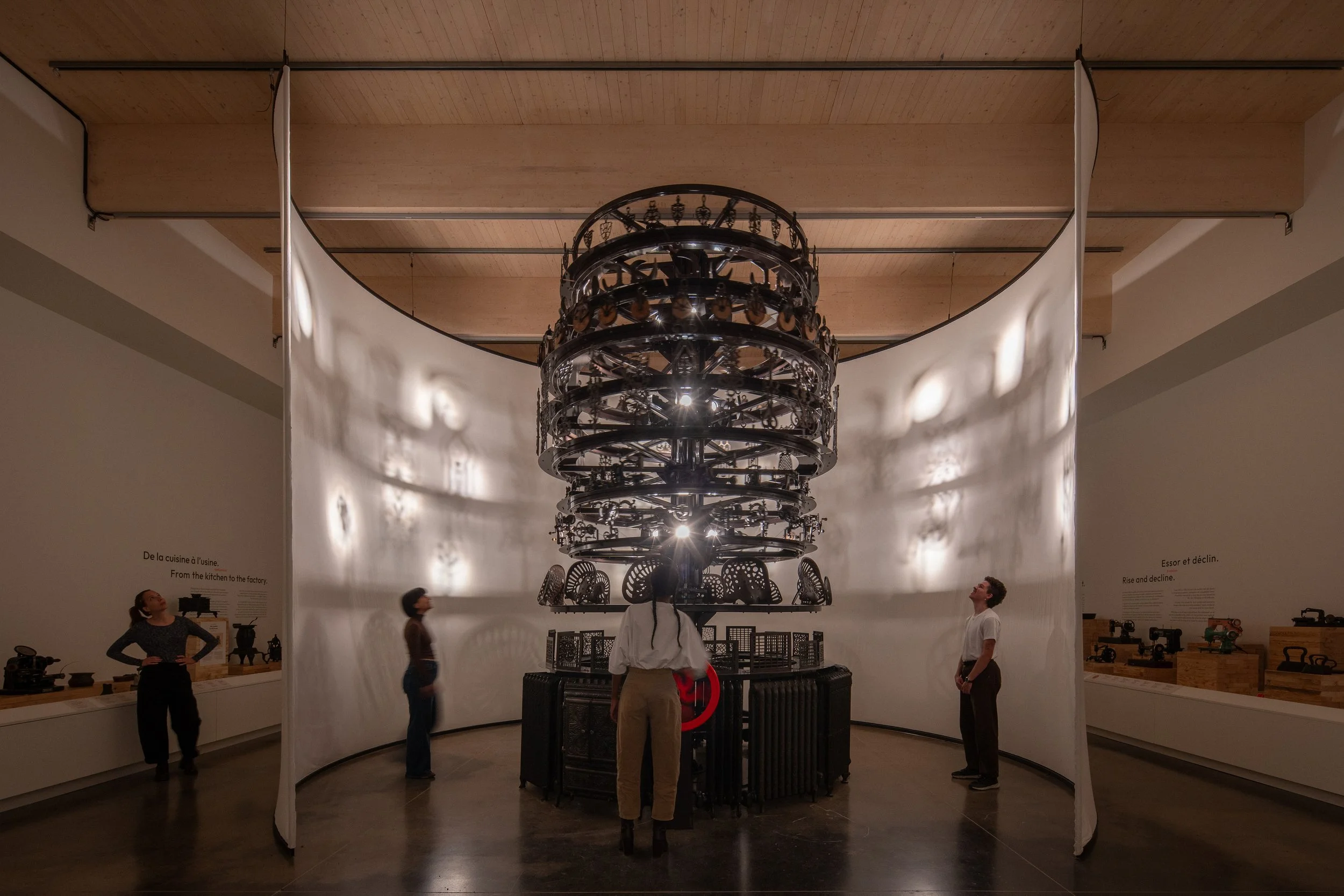
Hosting a collection of this nature requires careful consideration of materials and atmospheres. The reception and administrative areas are located at the lowest point of the topography, characterized by a sober materiality, oscillating between concrete and wood. In contrast, the exhibition spaces unfold like large, luminous museum boxes, their architecture showcasing laminated wood beam structures, celebrating renewable materials in dialogue with randomly punctuated high windows.
Outside, the walls are covered in dark wood with a charred appearance, echoing the forge fires that gave rise to the objects showcased in the collection. Through this materiality, the discovery center itself becomes an extension of the museum's narrative, revealing the values of recycling and sustainability that led to the creation of the collection. From the central trench, an exhibition platform and staircase offer a variety of routes, inviting the public to wander freely between the agricultural field, outdoor exhibitions, and pavilions. Universal accessibility is integrated into these pathways, ensuring barrier-free access to the entire museum and an inclusive experience.
The project is innovative in its approach to perceiving and deconstructing the idea of the museum institution, moving away from the elitism and purity often observed in order to adapt to the collection on display. By showcasing everyday and regional objects, the museum highlights everyday life and rural Quebec. The institution considers the dynamic nature of the collection and integrates it within its walls, allowing it to grow and be presented in an innovative and flexible way.
In keeping with this approach, the architecture seeks to move away from monumentalism in favor of a humble building that sits low to the ground, embodying the act of digging and connecting to Quebec's cast iron foundries.
Photographers: Raphaël Thibaudeau
Collaborators: Pluritec, GSM